
MAC Septic
Aerobic Septic System Maintenance
AVAILABLE IN SAN MARCOS, TX LOCATION
Why Choose MAC Septic for your Aerobic Septic System Maintenance?
Regular inspections help maintain the smooth operation of your septic system and catch potential problems before they turn into costly repairs. With proper professional care, aerobic septic systems can run cleanly, quietly, and effectively.
The Texas Commission on Environmental Quality mandates quarterly maintenance inspections for all aerobic systems including:
ROUTINE INSPECTIONS AND PUMPING
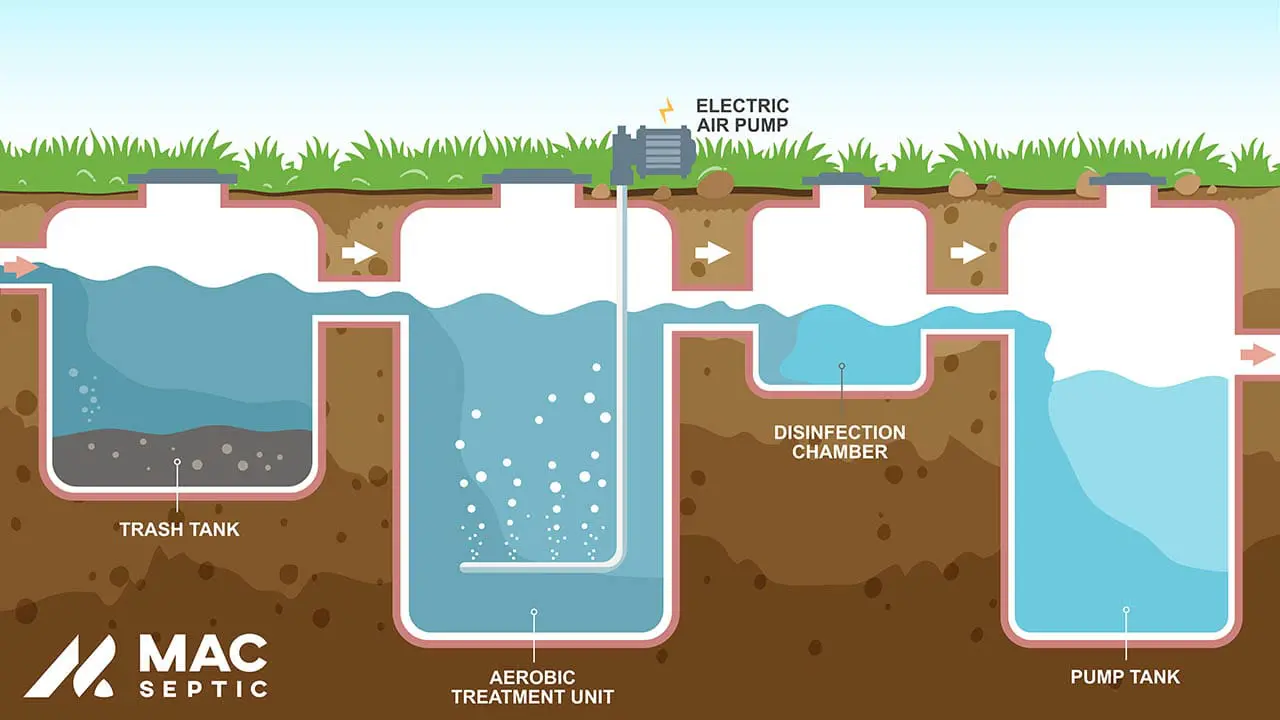
Even though aerobic systems break down solids more effectively, sludge still accumulates in the pretreatment or trash tank. If it’s not pumped out, solids can travel into the aeration chamber and damage the entire system.
AERATOR AND AIR PUMP CHECKS
The aerator introduces oxygen that aerobic bacteria need to thrive and break down waste efficiently. If the aerator fails, the system transitions into anaerobic mode, causing odors, poor treatment, and potential health hazards.
CHLORINE AND DISINFECTION MANAGEMENT
Most aerobic septic systems require a final disinfection step before the treated water is released through spray heads or drip irrigation. This is essential even after aeration, as wastewater still contains bacteria that must be neutralized to make the effluent safe.
SPRINKLER AND DRIP SYSTEM CLEANING
Once wastewater is fully treated and disinfected in an aerobic system, it’s released into the yard through either spray heads or a subsurface drip irrigation system. Both types require regular maintenance to prevent blockages, uneven distribution, odors, and system backups. Because these systems handle treated wastewater, not clean water, keeping them in good working order is essential for safety and performance.
ALARM AND CONTROL PANEL TESTING
Aerobic septic systems depend heavily on electrical components, sensors, and monitoring equipment to keep the system working correctly. The alarm and control panel act as the “brain” of the system, alerting homeowners to problems long before a failure becomes serious. Because these systems handle wastewater, even a small malfunction can compound into odors or environmental hazards, making regular testing essential.
FILTER CLEANING
Filters play a crucial role in keeping the aerobic system running smoothly. They trap solids, protect pumps and aerators from debris, and ensure treated effluent can move through the system without clogging lines or damaging components.
SIGNS THAT YOUR SYSTEM NEEDS ATTENTION IMMEDIATELY
Septic tanks have many parts and work within a network that include your home plumbing, the leach field pipes and the soil.
FREQUENT OR PERSISTENT ALARMS
If your system alarm keeps going off, it’s signaling a serious issue that needs immediate attention.
STRONG OR UNUSUAL ODORS
Foul smells around the tank or spray area indicate the system isn’t treating wastewater properly.
POOLING OR STANDING WATER
Soggy or flooded spots around your system can mean an overflow, leak, or spray malfunction.
FREQUENT NEED FOR CHLORINE REPLACEMENT
If you’re adding chlorine too often, the system may be overdosing or using water inefficiently.
SPRINKLER HEADS SPRAYING INCORRECTLY
Weak spray patterns, misting, or clogged heads point to distribution or pressure issues.
SLOW DRAINS OR BACKUPS
Drains that gurgle or back up suggest a blockage or rising water levels in the system.
NOISY EQUIPMENT
Drains that gurgle or back up suggest a blockage or rising water levels in the system.
CLOUDY OR UNTREATED EFFLUENT
Discolored or smelly sprinkler water shows the system isn’t fully treating the effluent.
ELECTRICAL AND CONTROL PANEL ISSUES
Flickering lights, tripped breakers, or unresponsive controls indicate electrical problems that can shut the system down.
OVERDUE INSPECTION/NEVER BEEN SERVICED
Missing routine inspections leaves problems undetected and increases the risk of system failure. Furthermore, a system that hasn’t been professionally serviced is highly likely to develop preventable issues.